Published on May 1, 2023 • Updated on February 13, 2026
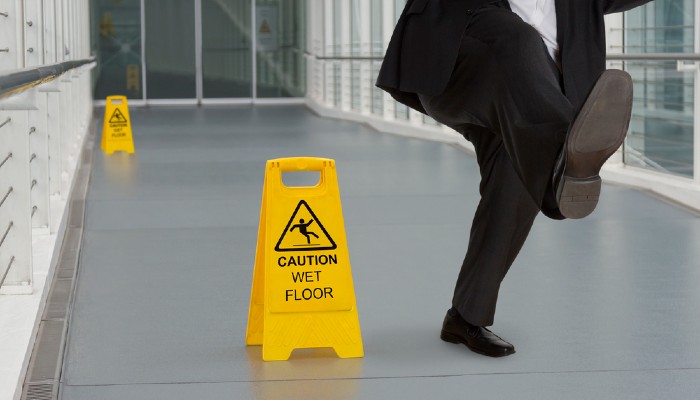
Whether it’s a spill, a freshly mopped surface, rain tracked indoors, or snow and ice brought in during Missouri’s harsh winter months, wet floors pose a serious slip‑and‑fall hazard. What seems like a routine, everyday situation can quickly lead to injuries ranging from minor bruises to severe head trauma, broken bones, or long‑term complications.
Winter weather often makes these risks even greater. Snow, slush, and ice can accumulate at entryways, on sidewalks, and in parking lots. As people walk inside, moisture is easily tracked onto smooth flooring, creating hidden slick spots that can catch anyone off guard. Property owners must take extra precautions during cold-weather seasons—such as placing mats at entrances, increasing inspections, and promptly addressing icy conditions—to keep visitors safe.
Quick sidenote. Wet floors are just one example of a hazard that can lead to a slip-and-fall accident.
Wet floors are one of the most frequent causes of slip‑and‑fall injuries in both public and private spaces. Property owners and business operators have a legal duty to maintain safe conditions and to alert visitors to any potential hazards.
Any wet or slippery substance on the floor must be cleaned up in a timely manner. Until the area is safe, customers, employees, and other visitors should be protected or clearly warned of potential dangers—typically with a wet floor sign, “watch your step” notice, or other visible markers.
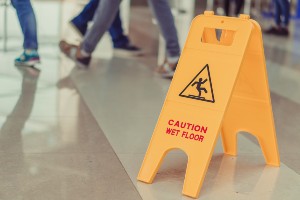 The familiar yellow A‑frame wet floor sign is the most common warning tool, but it’s not the only option. Businesses may also use orange safety cones, barriers, or taped‑off sections to keep people away from dangerous areas caused by spills, mopping, or leaks.
These warnings serve a dual purpose:
Maintaining dry, safe walkways—and clearly marking them when they’re not—is a simple but essential part of responsible property management.
Let us take a closer look at how everyday hazards can lead to serious injuries. Depending on the circumstances, you may be able to file a premises liability claim.
In short, premises liability holds property owners legally responsible for accidents that occur on their property due to unsafe conditions. In this case, the unsafe condition is some type of water/wetness on the floor.
In a slip-and-fall claim, you will need to prove that:
Examples of what might be used to prove the establishment “should have been aware” or that a dangerous condition existed:
A wet floor sign (or other warning) does not necessarily prevent you from filing a claim. If you prove that:
Your attorney can help determine whether the “Wet Floor” (or other warning) sign did its duty to warn, and may ask questions such as:
Some slip‑and‑fall accidents happen because of a person’s own inattention, but many occur due to a property owner’s negligence. If you were injured in a slip‑and‑fall incident on someone else’s property—whether caused by a spill, poor maintenance, or winter weather conditions—you may be entitled to compensation under Missouri’s premises liability laws.
Talk to a personal injury attorney who can help you determine whether you have a valid claim. Missouri follows a comparative negligence rule, meaning that although you could be partially at fault, you could still be eligible for compensation.
What makes a slip, trip, or fall a premises liability case? The presence of a neglected hazard—like a wet floor—that the property owner failed to address.
Questions? Call our knowledgeable team at (877) 284-6600.
 Slip and fall cases can be difficult to prove. To secure fair compensation for your injuries, you need an experienced and aggressive personal injury legal team that knows what to look for and how to build your case. The legal team at Nash & Franciskato Law Firm is that team, having obtained substantial settlements for premises liability cases. Contact us at (877) 284-6600 for a free, no-obligation case evaluation.
CONTACT US FOR A FREE EVALUATION
Past results afford no guarantee of future results, and each case is different and is judged on its own merits. The choice of a lawyer is an important decision and should not be based solely upon advertisements.
Photo Credits: